Rethinking Spinal Adjustments: Creating Alignment from the Inside Out
Restore alignment by reconnecting the intelligence of your nervous system with the structure of your body
Does this sound familiar?
You experience recurring discomfort in your ________ (fill in area of body: lower back, neck, shoulder, etc.). You seek out a local practitioner to give you an adjustment. It seems to help, but the relief doesn’t last long. Within days or weeks the tension slowly returns. You take pain pills. You get another adjustment. Some relief, but again, it doesn’t last. You begin to move through your days learning how to function with discomfort and even pain as a constant background companion that makes everything you do a little harder.

There are other options you may pursure to improve this situation. Some bodywork modalities, like craniosacral work or shiatsu/shin tai, offer adjustments that work with forces that lie beneath misalignments, rather than just pushing a bone into a ‘correct’ position. There are self corrective exercises that use muscle strength to rebalance joints that aren’t functioning properly. Practices like meditation, qi gong, yoga, weight workouts promote strength and flexibility while balancing energy flows. These can all help adjust our body’s structure.
There’s a new method that can bring your body into a depth of alignment that goes beyond these options. We’ve taken elements of a bodywork technique that’s part of the shin tai repertoire (Cranial Suture Vertebral Adjustments) and created a process you can do yourself to make adjustments on your own spine and sacrum. Adjustments that create real change in the body. Adjustments that release and resolve stress patterns that have pulled parts of your structure out of alignment in the first place. Adjustments that respect your body, listen to your body AND help restore the balance and flow of energy through areas that had been tied up from years of trying to function without proper alignment and communication.
You can restore alignment by reconnecting the intelligence of your nervous system with the structure of your body. It’s effective, it’s safe and it strengthens your body from the inside out.
Explore our new online course to learn a unique method to adjust your spine, sacrum, ribs & cranial bones.
“Something just moved!”
There are neurological and fascial pathways between your cranial sutures and the structure of your body. When you learn how to stimulate these connections, subtle waves of sensation and energy create release in the soft tissues. Compression softens. Suddenly you begin to feel small shifts deep in your spine. This increase of neural communication, fascia and muscle release, and the subsequent flows of energy = misaligned vertebrae adjust themselves.
Let’s imagine that you learn a process to create a connection between a specific cranial sutures and your lower back. At first this idea may seem surprising. The skull and the lumbar spine feel like distant structures, yet within the body they communicate constantly through proprioceptive pathways. When you begin to focus on the steps to do the adjustment you don’t notice much. Then, perhaps within 30 seconds or so, you start to feel some sensations spreading through your suture and rippling through your lower back. Then your breathing deepens. Tissues around your sacrum and lower lumbar soften. A subtle wave of movement passes through the area and you feel a small shift deep inside your spine. Something just moved. The vertebra adjusted itself.
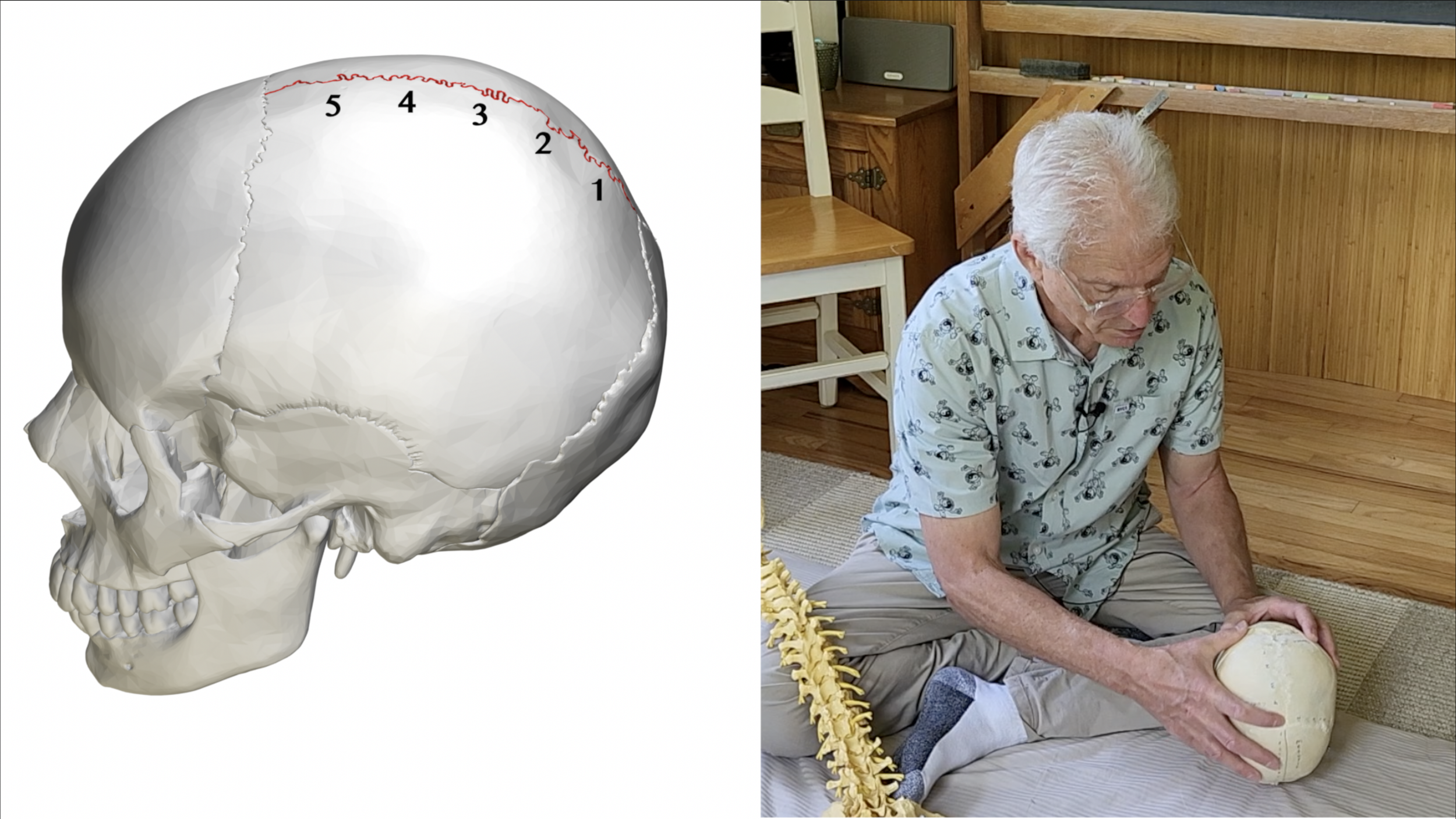
The Sagittal Suture & the Lumbar Vertebrae
Perhaps even more interesting is what happens next. Over the following weeks you practice the same technique several times. Instead of relying on someone else to manipulate your spine, you learn how to reconnect the nervous system with the structures that needed to reorganize. Gradually your body begins making its own adjustments more easily.
It also begins making small adjustments naturally through each day, resolving stresses when they’re still small, before they grow into an obvious symptom. The self-adjusting capacity of your body has been empowered and will continue to work in the background. The discomfort that had returned again and again for years begins to fade; not because someone forced the bones into a correct position, but because the body regained its ability to organize and self-correct on its own.
This reveal an important truth: The body contains an extraordinary intelligence for alignment. When the right signals are restored, structural change can emerge from within. This principle lies at the heart of the course Self-Adjustment of the Spine & Sacrum.
Instead of relying on someone else to manipulate your spine, you learn how to reconnect the nervous system with the structures that needed to reorganize.
Restoring Alignment From the Inside Out
Most of us think that “getting an adjustment” means someone cracks our back in order to push misaligned vertebrae back into a ‘correct’ position. The idea is simple: If a vertebra is out of place, someone needs to push it back. While this approach can sometimes bring temporary relief, it rarely addresses a deeper question: Why did the vertebra move out of alignment in the first place? In most cases, vertebrae do not shift randomly. Something has created pressure in the system.
There may have been micro-stresses accumulating over time: postural habits, repetitive movement patterns, emotional tension, or subtle imbalances in how the body organizes itself in gravity. Or there may have been macro-stresses such as injury, impact, or sudden strain. These stresses compress tissues and alter how force travels through the spine. As a result, a vertebra may rotate, shift, or feel “off-kilter.”
The compromised vertebra itself is rarely the primary problem. It is responding to a larger pattern within the body. When we simply push a vertebra back to where we think it should be, the forces that originally displaced it often remain unchanged. The body may temporarily accept the correction, but soon the same pressures pull the vertebra back into its previous position. Sometimes forcing a correction can even increase stress in the surrounding tissues, creating more guarding and resistance in the system.
For alignment to truly change, something deeper has to shift.
Alignment Is Not a Fixed Position
Alignment is often imagined as moving a structure from one fixed point to another. A bone is here. It should be there. But the body doesn’t function according to static geometry. True alignment is the body’s ability to continuously coordinate itself with gravity.
A healthy spine is not rigidly held in place. Instead, it makes thousands of subtle micro-adjustments every moment, distributing force and adapting to movement. Alignment is therefore less about forcing structures into place and more about restoring the fluid range of motion each part of the structure naturally has that allows the body to organize itself naturally. When mobility and communication are lost, structures become compressed and fixed. The spine stiffens, compensations develop, and areas such as the sacrum and sacroiliac joints may lose their ability to respond dynamically.
Restoring alignment requires re-awakening the body’s own organizing intelligence so that it can once again self-correct as a natural part of it’s daily activities.
The Nervous System Already Knows Alignment

Within your body is a sophisticated network of sensors that constantly monitors position, pressure, and movement. These proprioceptive receptors inform the nervous system about how your body is oriented in space. Think of this proprioceptive system as your inner GPS.
Your system already knows when a joint is out of alignment. But sometimes communication becomes disrupted. When the nervous system loses clear feedback from a region, the body may not coordinate the adjustment needed to restore balance.
Let’s imagine you’re outside working in your yard and you reach down to pick up a potted plant. As you rise up and turn to put it in a new spot you feel something seize up in your back and uh-oh…. pain. Ugh. If there’s stress built up in your body, your system may not adapt quickly to readjust the slipped vertebra. If the area is already vulnerable, this compounds the problem. Instead of your body restoring equilibrium by self correcting, the joint remains stuck. Stress and compression have compromised the flow of information and energy, preventing the innate wisdom of your system to restore alignment.
When communication is restored, the body regains its ability to reorganize itself naturally.
The Cranial–Spinal Connection
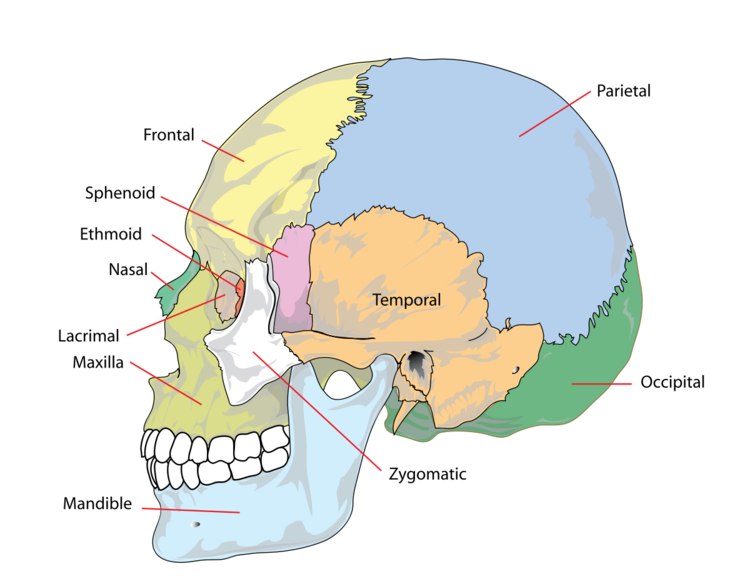
One of the most fascinating aspects of structural organization in the body is the relationship between the cranial sutures and the spine.
The bones of the skull are not fused into a rigid shell. They are joined by sutures: subtle joints that have a small range of movement that affect our system deeply in many ways. These sutures communicate with the spine through neurological, fascial, and energetic pathways.
In our newly released course, you will learn how to create an information relay between cranial sutures and specific areas of the body, particularly:
The vertebrae from the neck down to the lower back
The sacrum & sacroiliac joints
The ribs
By connecting proprioceptive receptors in the cranial sutures with these structural regions, you support the nervous system to regain clarity about the body’s organization. This creates a powerful feedback loop that can stimulate the body to reorganize its own alignment.
One helpful way to think about the relationship between the cranial sutures and the spine is to imagine a tent supported by guide wires. The central pole of the tent is like the spine. The fabric of the tent represents the fascia and connective tissues that distribute tension through the body. And the guide wires that stabilize the entire structure are like the cranial sutures and the sensory receptors within them.
When the tension in the guide wires is balanced, the tent stands upright and stable. But if one wire becomes overly tight or loses tension, the pole begins to tilt. The entire structure compensates. Simply pushing the pole back to vertical doesn’t solve the problem. The tension in the guide wires still needs to be adjusted.
In the same way, when we restore communication between the cranial sutures and the spine, the nervous system can rebalance the internal tensions that organize the structure. The spine then has the ability to re-align itself naturally.
Learning the Art of Self-Adjustments

The Squamosal Suture & the Cervical Vertebrae
If this approach to adjustments appeals to you, you are welcome to explore an online course that details how to use this method to restore alignment in your spine, sacrum, ribs and cranial bones. Rather than relying on someone else to push bones into place, you learn how to stimulate alignment from the inside out.
Through specific practices, you develop the ability to:
• Connect cranial proprioceptive receptors with spinal structures
• Restore communication between the nervous system and a subluxated vertebra
• Increase mobility and alignment in the vertebrae and sacroiliac joints
• Synchronize the body’s natural energy rhythms
As your neural and fascial pathways become more active and accurate, your body begins to adjust itself. Tissues soften. Subtle movement returns. Structures begin coordinating again. Instead of forcing a vertebra into position, the system finds its own alignment.
Alignment becomes not just a rigid correction, but an ongoing process of adaptation and balance.
Synchronizing the Body’s Rhythms
Once this communication pathway is active, you can stimulate another layer activity that takes the adjustments even deeper: the craniosacral rhythm. There’s a craniosacral fluid moving inside your spinal column; it creates a rhythm, an undulating motion of expansion and flexion through your whole body. When you learn how to feel and coordinate this part of your system with the sutures and the structure, you have access to a whole new depth of healing.
The rhythms of the body - breath, fluid movement, pulse and energetic flow - start to synchronize. Rather than competing forces pulling the body in different directions, the system begins functioning as a coherent whole, full of vitality and intelligence. The spine lengthens. The sacrum settles into balance. The ribcage expands. The cranial bones respond. This dynamic synchronization allows the body to coordinate more efficiently with gravity.
Alignment becomes not just a rigid correction, but an ongoing process of adaptation and balance. Many people experience this as a feeling of the body rediscovering its natural axis of organization.
Alignment, Health, and Consciousness
When the vertebrae, sacrum, and cranial bones regain mobility and coordination, the effects extend beyond structural comfort. This synchronization of forces can support both physical health and expanded awareness. The nervous system receives clearer information. Energy moves more freely through the system. Breath deepens. Movement becomes more efficient. Emotions flow with less drama and disruption. Thoughts are clear and support your true intentions.
Structural alignment and consciousness are deeply related. When the body organizes itself more coherently, perception and vitality expand as well.
Taking the Reins of Your Own Healing
Treatments and therapies can play an incredibly valuable role in restoring health. Skilled practitioners can facilitate profound shifts in mobility, alignment, and nervous system regulation. But to access the deepest layers of healing and transformation, we eventually need to participate directly in our own process.
To transform patterns of dis-ease requires, at some point, that we take the reins into our own hands. Self-adjustments provide a way to do exactly that. By learning how to reconnect the nervous system with the structural intelligence of your body, you begin to cultivate alignment from within. Instead of relying solely on external corrections, you develop the ability to actively participate in your own structural and energetic balance. And this is where the work becomes not only therapeutic—but truly transformative.

New online course special 50% off this week
Self Adjustment of the Spine & Sacrum
Restore alignment by reconnecting the intelligence of your nervous system with the structure of your body. Click the button below for info & registration: